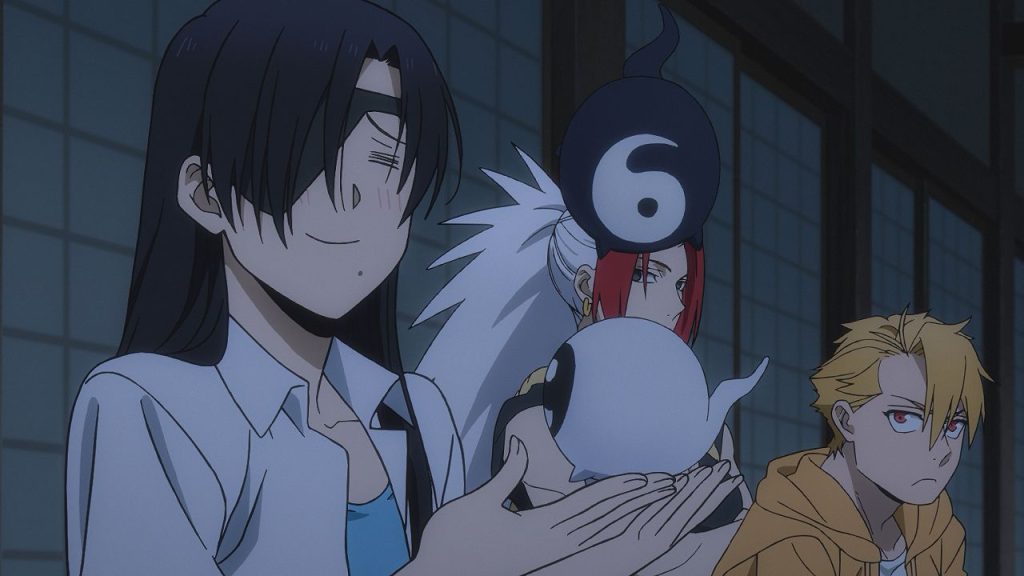
Daemons of the Shadow Realm Episode 6 Shifts Focus Toward Asa’s Emotional Core
Daemons of the Shadow Realm continues proving that beneath its supernatural action and political intrigue lies a far more psychologically layered story than it initially appears.
Episode 6 places Asa firmly at the center, peeling back additional layers of her trauma, survival instincts, and deeply rooted emotional scars.
While previous episodes established her as a dangerous, highly capable figure, this chapter reinforces an essential truth: Asa’s violence is not her defining trait, but rather the byproduct of profound suffering and relentless survival.
Asa’s Humanity Remains Intact Despite Her Bloodstained Path
One of the episode’s greatest strengths is its careful handling of Asa’s duality.
Despite her willingness to kill and her brutal capabilities, Asa is not portrayed simply as a hardened warrior.
Instead, the series consistently reminds viewers that much of her behavior is rooted in:
- Years of imprisonment
- Continuous pursuit
- Fear of losing freedom
- Deep familial longing
Her relationships with Jin, Gabby, and especially Yuru demonstrate that she remains emotionally vulnerable, even if much of that vulnerability is hidden beneath hardened instincts.
This balance between ruthlessness and humanity makes Asa one of the series’ strongest characters so far.
The Episode’s Exploration of Fear Is Especially Effective
Perhaps the most revealing aspect of Episode 6 is its focus on Asa’s true fears.
Despite constant threats to her life, Asa’s greatest terror is not death itself, but a return to the darkness and confinement of her childhood imprisonment.
This distinction is crucial.
Her trauma is not simply physical danger, but psychological captivity.
The darkness of the cage represents:
- Powerlessness
- Isolation
- Loss of agency
- Emotional suffocation
By emphasizing this, the series transforms Asa from a straightforward action heroine into a far more tragic and emotionally resonant figure.
Yuru’s Emotional Avoidance Continues to Define His Character
While Asa confronts her internal fears, Yuru remains trapped in a different form of psychological defense: avoidance.
His tendency to bury himself in immediate tasks rather than process larger truths has become an increasingly important trait.
As Episode 6 highlights, this is not mere denial, but an extension of his upbringing as a hunter.
Yuru is conditioned to focus solely on immediate objectives while suppressing distractions, including his own emotional complexity.
This mentality grants him strength, but the episode strongly implies that such rigidity may eventually become his greatest weakness.
The contrast between Asa’s forced self-awareness and Yuru’s emotional suppression creates compelling sibling tension.
The Worldbuilding Around Daemons Gains New Nuance
Episode 6 also quietly expands one of the series’ more intriguing thematic elements: humanity’s varied relationships with Daemons.
Different factions view Daemons through vastly different lenses:
- Yuru views them as sacred local deities
- Hana and Kagemori allies see them as partners
- Assassins reduce them to expendable tools
This layered perspective reinforces the idea that Daemons themselves are not inherently good or evil, but rather shaped by human ideology and power structures.
Gabby’s particularly strong emotional reaction to Daemon mistreatment hints at deeper personal history that may become highly significant later.
Asa’s Backstory Now Feels Central to the Series’ Future
With next week seemingly poised to delve directly into Asa’s past, Episode 6 functions as highly effective groundwork.
By clarifying her emotional framework, fears, and motivations before revealing her full history, the series ensures that her backstory will likely carry greater narrative and emotional impact.
This is strong storytelling structure, as it prioritizes character investment before exposition.
Animation and Tone Continue to Support the Series Well
While not the flashiest episode in terms of pure action, Episode 6 benefits greatly from strong atmospheric direction and emotional tone.
The darker psychological elements, tension-heavy encounters, and shifting moral ambiguity continue to give Daemons of the Shadow Realm a distinctive identity within the supernatural fantasy genre.
Why Episode 6 Is One of the Season’s Strongest So Far
This installment succeeds because it combines:
- Psychological depth
- Character development
- Worldbuilding
- Emotional nuance
- Foreshadowing
Rather than relying purely on action escalation, it strengthens the emotional and thematic foundations that will make future revelations more meaningful.
Final Verdict
Daemons of the Shadow Realm Episode 6 is an emotionally powerful and narratively rich chapter that significantly elevates Asa as one of the series’ most compelling figures.
By exploring trauma, fear, and survival through Asa’s perspective while contrasting it against Yuru’s growing emotional stagnation, the series deepens both its central sibling dynamic and its larger thematic ambitions.
This episode demonstrates that Daemons of the Shadow Realm is not merely a supernatural action story, but a layered exploration of trauma, identity, and the cost of freedom.
With Asa’s full backstory looming, the series appears poised to become even stronger in the episodes ahead.
Score: 9/10
